
Business travel
Corporate travel that finance can reconcile and travellers can rely on
Airport runs for staff and visitors, transfers between meetings, and station work across north Essex — arranged against your own reference and settled on one invoice instead of a folder of card receipts.
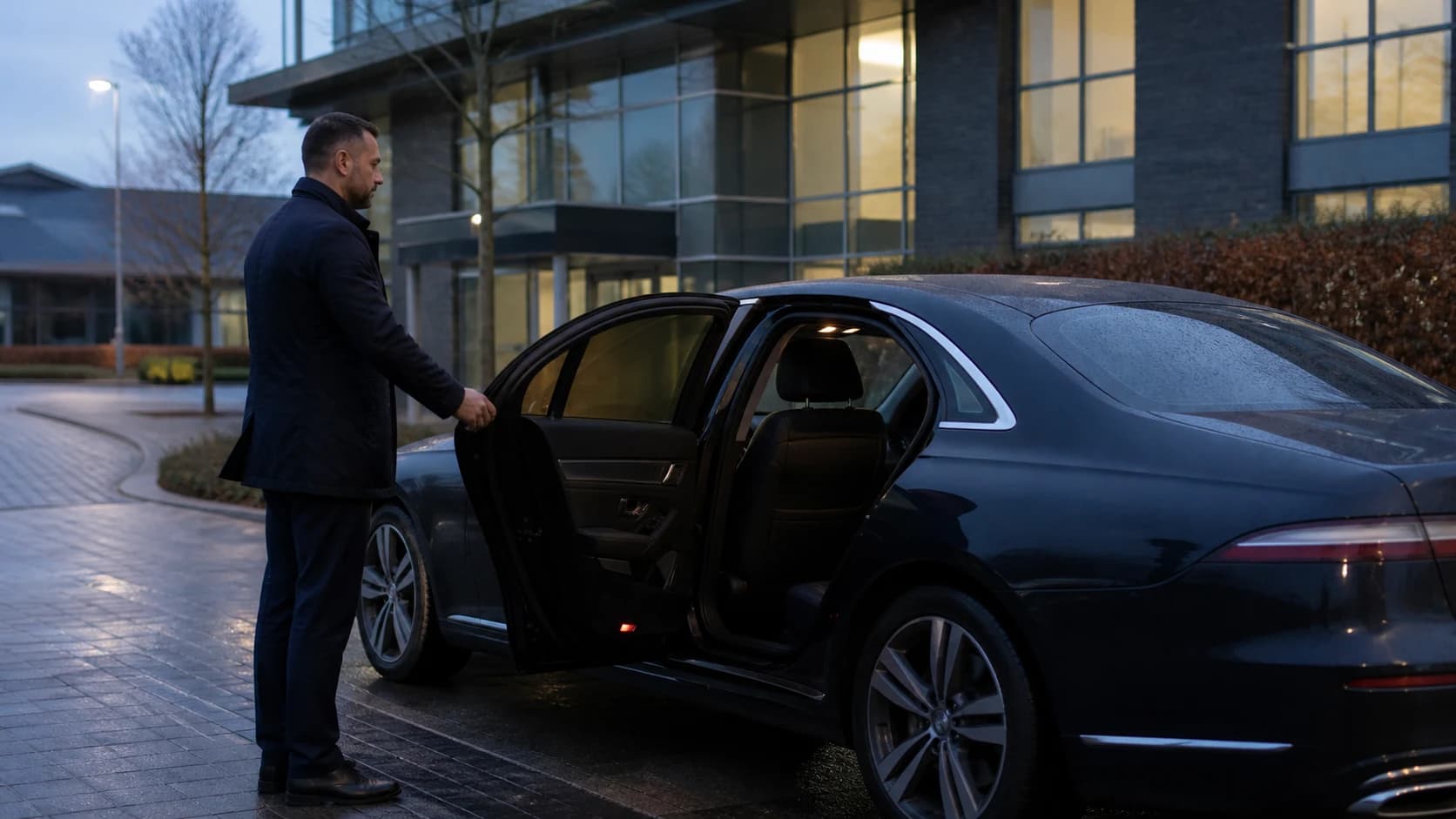
Who uses it
Built around the three journeys businesses actually book
Corporate travel is not one service. These are the patterns the office is asked for most, and each one changes something about how the booking is taken.
Staff to the airport
Someone flying out of Stansted or Heathrow on company time. The fare is the published one, the vehicle is chosen for cases and laptop bags, and the journey lands on the monthly invoice rather than a personal card waiting to be expensed.
Published fixed fare
Visitors and candidates
A client, a candidate or a supplier your team has never met. We take their name and mobile so the driver is not phoning your reception to ask who they are looking for.
Booked by name
Meeting to meeting
Multi-stop work across Colchester, Ipswich and Chelmsford in a morning. These have no published fare, so the office quotes the run before it starts rather than totalling a meter afterwards.
Quoted by the office
Accounts
Four steps, and only the first one involves us
An account exists so that booking a car stops being a purchasing decision. Once it is open, a journey takes one phone call or one form.
Call the office
Tell us the billing contact, the invoice address and the reference journeys should carry.
We set the account up
Your bookers are recorded, so a journey can be arranged by name without a card each time.
Book as normal
By phone, or online for any route with a published fare. The reference goes on the journey.
One invoice
Journeys itemised against your references, so finance can reconcile without ringing us.
Accounts are arranged by the office. Invoicing cycles and formats are agreed with you at that point — we would rather set the expectation in a conversation than publish terms and change them.
Why it holds up
The licence check runs on the booking, not on a spreadsheet
A private hire operator has to know that the driver holding a job is licensed on the day of that job, and that the car is taxed, tested and insured on that day too. Most firms verify that periodically and hope.
This system refuses the assignment. If a driver’s badge or DVLA licence, or a vehicle’s plate, MOT or insurance, expires before the pickup date, the job cannot be attached to them — the check is a condition of the booking rather than an audit after the fact.
For a business booking travel for its own people and its own visitors, that is the part worth asking every operator about.
Settling up
What the invoice is designed to answer
- Who travelled, and on what date.
- Where the journey started and finished.
- The reference the booker gave — cost code, department or client matter.
- The fare, which for airport routes is the published one.
There is no card handling fee on any journey, on an account or otherwise. Surcharging consumer cards has been unlawful since January 2018, so it is not a discount we are offering — it is simply absent.
What we ask of you
Two things that keep it clean
Tell us who may book
An account that anyone can book against is an account nobody can reconcile. Give us the names, and change them whenever you need to.
Call early for changes
Flights move and meetings overrun. The office is answered around the clock, and a call at the point the plan changes is worth more than a note on the original booking.
Questions
What finance teams and PAs ask first
How do we open an account?
Call the office and ask for an account. We take the billing contact, the address the invoice goes to, and the reference you want journeys booked against — a cost code, a department, a client matter number, whatever your finance team reconciles by. Accounts are arranged by the office rather than opened online, so somebody has actually spoken to you before the first invoice.
Can different people book on the same account?
Yes. Most accounts have several bookers — a PA, a receptionist, the traveller themselves. Each journey is recorded against your reference, so the invoice shows who went where rather than a single undifferentiated total.
Is the price the same as the public fare?
Airport fares are the published ones — a saloon to Stansted is £81.50 whether it is booked on an account or paid on the day. Journeys with no published fare, including most local and multi-stop work, are quoted by the office before they run.
Do you invoice monthly?
That is the intention for account customers, with the journeys itemised. Talk to the office about the cycle and the format your finance team needs before the first booking, rather than after the first invoice.
Can you collect a visitor we have never met?
Yes — give us their name, mobile number and flight or train details when you book. How the driver meets them at an airport, and any waiting allowance, are worth confirming with the office when you book, because those terms are still being finalised and we would rather not publish something we then change.
Are your drivers licensed and checked?
Every driver holds a private hire driver licence issued by the council, and every vehicle holds a private hire vehicle licence. This site refuses to dispatch a driver whose badge, DVLA licence, MOT or insurance expires before the date of the journey — that check runs on the booking, not on a spreadsheet.
Also from Colchester
Other work the office takes
Airport transfers
Fixed prices to Stansted, Southend, London City, Heathrow, Gatwick and Luton, agreed before you travel.
Seaport and cruise transfers
Southampton Port sailings, with the luggage room a fortnight away actually needs.
Event and theatre trips
An evening in London without the last train home deciding when you leave.
Local journeys
Station runs, appointments and errands across Colchester, priced by the office.
Open an account before the next trip, not during it
One call sets up the reference, the billing contact and the bookers. After that a car is a phone call, and the paperwork arrives once a month.